
Lubbock County 24 Hour Releases
No separate official Lubbock County list shows everyone released during a rolling 24-hour period. The county jail roster gateway offers an interactive roster, a read-only PDF, and a downloadable Excel file. All three are forms of the same real-time, current-custody data. They are not release archives. Changing formats cannot reveal a prior entry that has already dropped from the active data.
The roster is still a useful first check. A matching entry generally supports that the person remains in county custody at the time shown. An absent entry starts the next step; it does not prove release. The person may have posted bond, received a court order, completed time, transferred to TDCJ or another custodian, or appeared under different identifying details. Lubbock County also warns that roster information can contain errors or omissions.
Check Lubbock Same-Day Releases
A same-day inquiry should preserve the time of each check. That small detail helps distinguish a later roster update from a true conflict between records. Use the person’s full booked name and, when known, date of birth, booking number, SID number, or court cause number. Similar names are common, and a name-only match can point to the wrong booking.
- Open the official county roster and check the interactive view. Note the search date and time.
- Review the PDF or Excel version only as a second view of current custody, not as a past-release list.
- If the name is absent, check Texas IVSS-Counties for a saved custody event and inspect the correct criminal court case.
- Submit the LSO-1064 request form for the existing booking and Release / Transfer Documentation.
- If transfer is possible, use TDCJ for state prison, BOP for federal prison, or the proper receiving agency.
For a broader named-person workflow, the Lubbock County released-inmate search guide explains how county, state, federal, and court records fit together. Two matching official records provide stronger support than any one search miss.
Lubbock 24 Hour Record Fields
Because no public 24-hour feed exists, these are fields to request from the booking and release record. LCSO may maintain some items under local labels or codes, and not every item must be public. Ask the office to redact exempt matter and release the rest. If a code is unclear, request its definition rather than guessing at its legal effect.
| Field | What it can establish |
|---|---|
| Booked name and identifier | Connects the event to the correct person and booking. |
| Booking date and number | Separates one jail stay from another. |
| Release date and time | Shows when LCSO relinquished custody. |
| Release type or code | May identify bond, court order, time served, sentence completion, or another disposition. |
| Releasing authority | Identifies the court, sheriff, or other authority behind the event. |
| Destination or transfer agency | Distinguishes community release from movement to another custodian. |
| Charges and cause numbers | Connects the jail event to the durable court file. |
A release timestamp answers when custody at this facility ended. It may not answer why. The signed court order, judgment, or receiving-agency record can provide the legal context that a short jail code lacks.
Request Lubbock Release Documentation
The Lubbock County Sheriff’s Office accepts written requests by email at LCDCRecords@LubbockCounty.gov, fax at (806) 775-7991, mail at P.O. Box 10536, Lubbock, TX 79408, or in person at 712 Broadway. The official LSO-1064 Request of Information form includes choices for Booking/Intake Records, Jail Logs, Movement/Transport Records, and Release / Transfer Documentation.
Describe an existing record. Give the full name, date of birth, booking or SID number, cause number, and a narrow date range when available. Ask for the jail card, release date and time, release type or code, releasing or receiving authority, destination, and any relevant transport entry. Electronic copies may reduce handling. The research found no fixed local release-record fee or guaranteed delivery period, so do not assume either.
Texas Government Code Chapter 552 requires prompt handling. If an agency seeks to withhold requested material, Section 552.301 generally sets a ten-business-day deadline to request an attorney general ruling. That deadline is not a promise that the requester will receive all responsive records in ten days.
Lubbock Bond Release Timing
Lubbock’s bond process can create same-day roster changes, but it is not a 24-hour release feed. The Sheriff FAQ says initial appearances occur at least twice each day and sometimes more. The active-search page also describes magistrate livestreams as often as three times daily when needed. Once a magistrate sets bond, the active roster updates.
Full bond may be paid at the Detention Center Bond Window or arranged through a surety. A bond release means the person leaves physical custody while the criminal case continues. It is not a dismissal, acquittal, or finding on the charge. Lubbock’s Fair Defense Plan also addresses probable-cause deadlines after warrantless arrests, with separate misdemeanor and felony time frames and stated bond or personal-recognizance paths when the state is not ready.
Those rules explain why a status may change during the day. They still do not document the release itself. The booking/release record and the court’s bond or release order should agree before the event is treated as confirmed.
Lubbock Sheriff App Custody Check
LCSO offers an official mobile app. The official iOS listing is one direct source for it, while an Android version is also published. The Sheriff’s own FAQ says the app Jail Search covers people currently “in jail” and updates every 30 minutes. That makes it a current-custody cross-check, not a released-person archive.
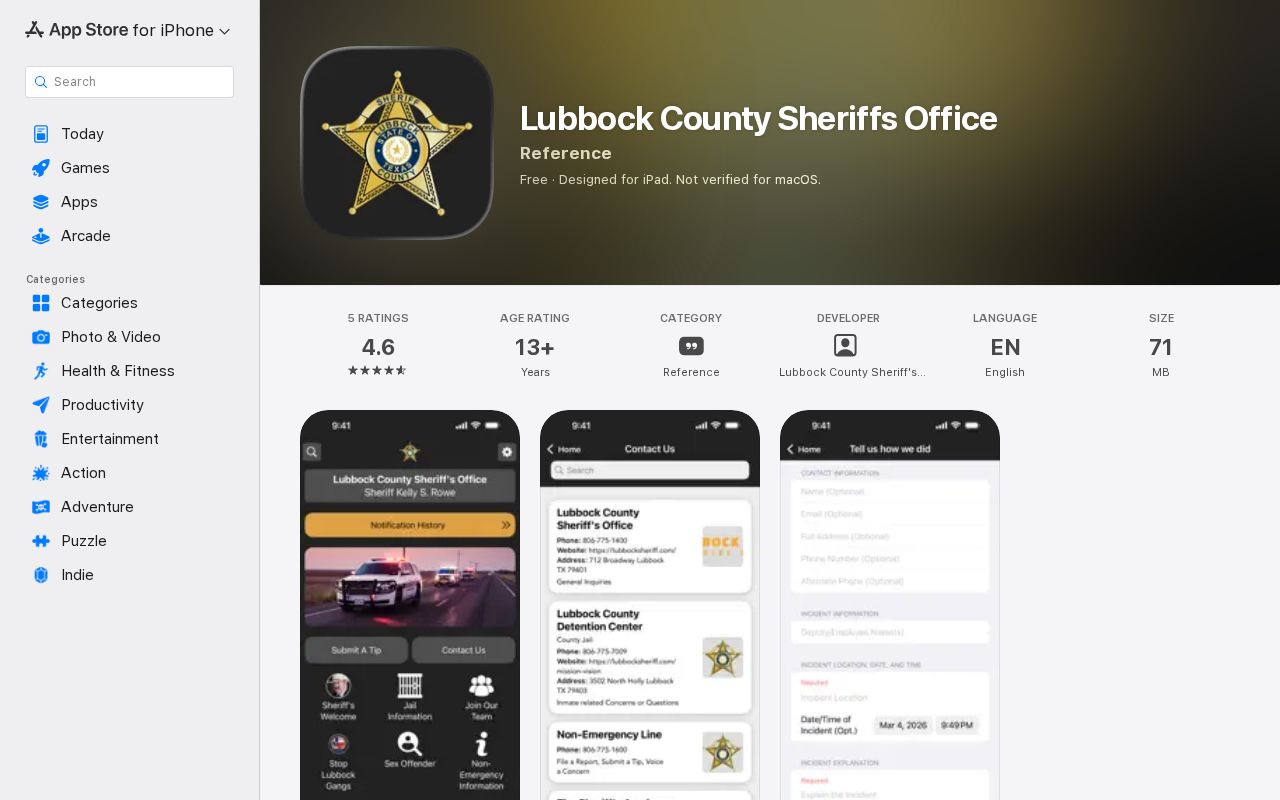
The image identifies the official app source, but it does not establish a recent-release tab. A missing app result has the same limit as a missing web-roster result. Follow it with the release or transfer record instead of assigning a reason to the absence.
Lubbock Release Versus Transfer
A true community release and a transfer both remove a person from the Lubbock County Detention Center roster. The next system depends on the destination. A person sent to a TDCJ prison may appear in state inmate information after intake and data updates. Someone moved under federal authority may require the federal docket, USMS information, or the BOP locator. An immigration detainer may lead to ICE custody rather than release into Lubbock.
Texas IVSS-Counties can help when a notification was saved. It searches people in custody or under supervision and may omit those no longer in custody, so a later name search is not a complete historical record. Court files also matter. Lubbock County Clerk handles misdemeanor county-court-at-law records, while the District Clerk is the path for felony district-court records.
Released means physical custody at the named facility ended. Transferred means another authority received the person. The release type, destination field, and signed court record keep those events from being confused.
Confirm Lubbock Release Details
The court case can explain a same-day change that the live roster cannot. For a misdemeanor county-court-at-law matter, use the County Clerk record and carry the cause number into any copy request. The District Clerk maintains felony district-court records. Look for a bond entry, release order, dismissal, judgment, sentence, jail-time credit, or transfer-related order. A brief docket label may not capture the full ruling, so obtain the signed order when the reason for release matters.
Identity should remain consistent across each source. Compare the booked name, birth information, booking number, charge, and cause number before joining a jail event to a court case. Save the exact terms used by each office. A release code, a court disposition, and a custody status answer different questions, even when all concern the same person.
For state-prison custody, TDCJ’s online tool covers current inmates and updates on working days with data at least 24 hours old. It does not provide a county-jail release history. A person sent from Lubbock County to TDCJ has transferred rather than entered the community. For a former state prisoner, use TDCJ’s information channels, the sentencing court, and the Parole Division when supervision may continue. This custody-first approach keeps a same-day roster change tied to the right agency and record.
Public Record Search
Sponsored Results